

-
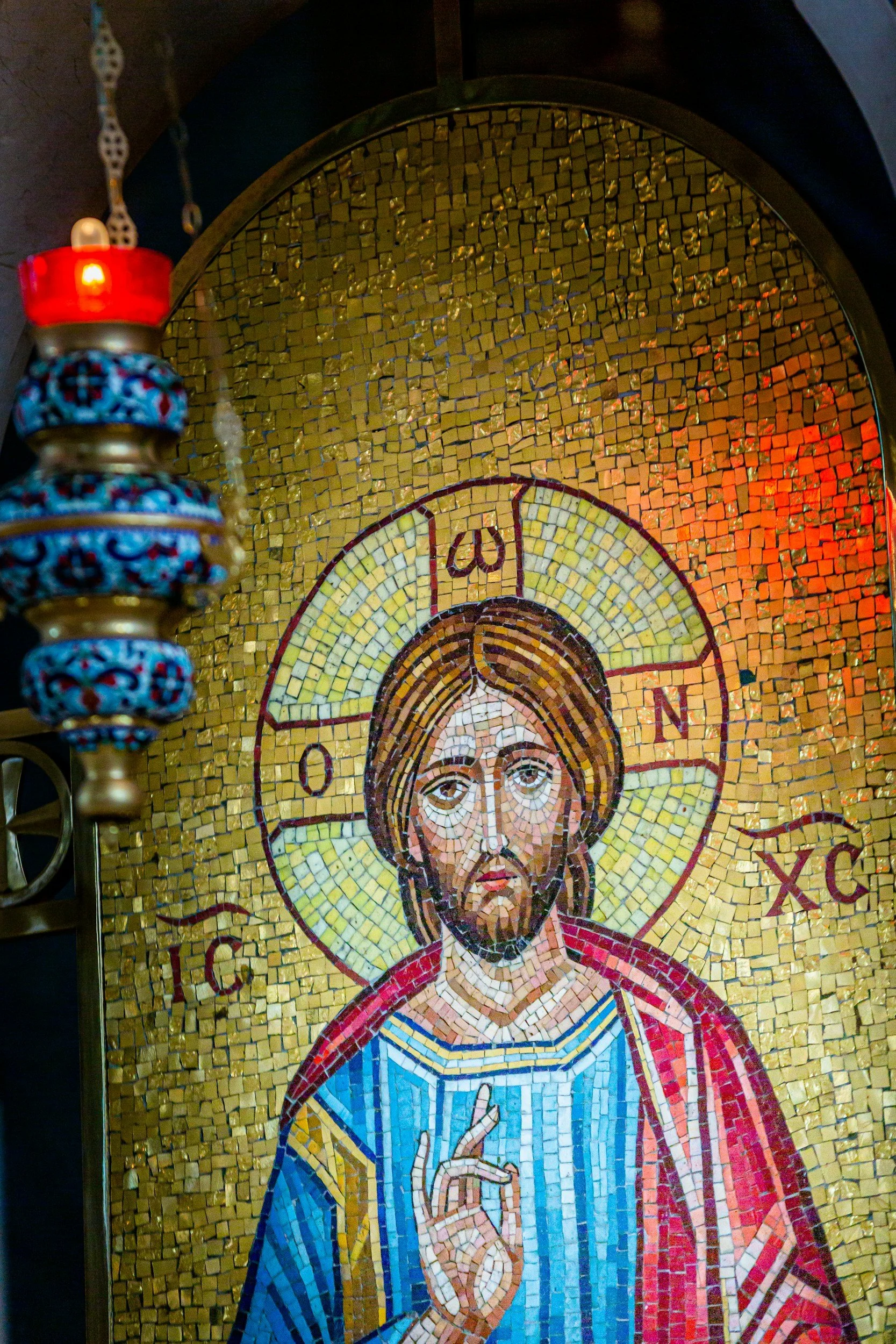
Metropolitan Tryphon of Moscow, born Prince Boris Turkestanov, and so gifted a preacher that people called him the Moscow Chrysostom, wrote this akathist around 1929, near the end of his life and at the height of the Soviet persecution of the Church. He took its title from the last words of St. John Chrysostom, who died in exile in 407 saying Glory to God for all things. Tryphon died in 1934 and the hymn went underground with everything else. It surfaced by accident; when Archpriest Gregory Petrov died in a Soviet labor camp in 1940, the manuscript was found among his belongings, and for decades everyone assumed Petrov had written it. You will still see his name attached to it. Copied by hand and passed quietly from believer to believer, it was not published openly until 1970, and then so only abroad. What survived is a hymn of astonishing gratitude written by a man watching his Church destroyed. It is intensely personal, saying I throughout, and finding the glory of God in sunlight, in birdsong, in the smell of rain on the earth, and in the faces of the dead.
-
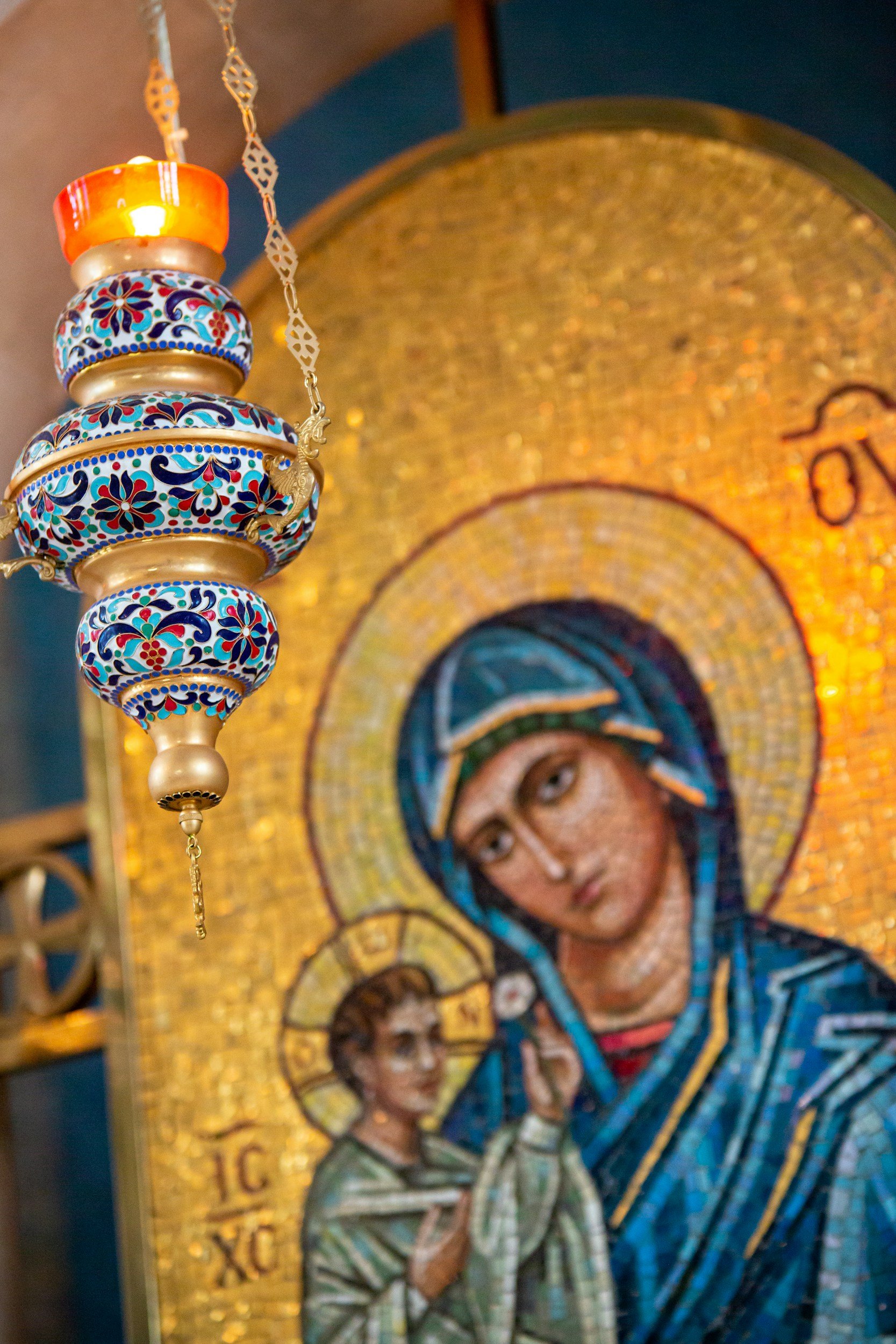
In 1878 a retired soldier from Tula province had drunk away his pension and lost the use of his legs. St. Varlaam of Serpukhov appeared to him three times in dreams, telling him to find an icon called "The Inexhaustible Cup" and pray before it. He set out crawling on all fours; on the first night of the journey his legs began to obey him again. He reached the Vladychny Convent in Serpukhov and the nuns had never heard of such an icon, until one remembered an image hanging in a passageway with a chalice painted on it. They turned it over. On the back was written The Inexhaustible Cup. He went home healed of both the paralysis and the drink. The Russian Church entered its commemoration in the calendar in 1997.
-
Michael has no founding miracle and no author to name; what the Church knows of him comes from Scripture and from the shape of his feast. His name is a question: Mika'el, "Who is like God?" Tradition holds it as the cry he raised when Lucifer set himself above his Maker. He appears outside Jericho as the commander of the army of the Lord, and Joshua falls on his face before him and is told to take off his sandals for the ground is holy. Daniel calls him the great prince who stands guard over the people of God. Jude has him disputing with the devil over the body of Moses. John sees him in the Revelation casting the dragon out of heaven. The Church keeps his synaxis on the eighth of November, the eighth day for the age to come, in what was once the ninth month, for the nine ranks of the bodiless powers he commands. He is not a warrior for his own sake. Every appearance of his is the same shape, as he stands between the people of God and whatever would destroy them.
-
Orthodoxy reached North America in 1794, when eight monks from Valaam landed on Kodiak Island. Within two years one of them, Juvenal, had been killed in the Alaskan interior, the first martyr on American soil. Another of the eight, Herman, stayed forty years on Spruce Island and died there in 1837. What followed is a strange and various company: Innocent, who built an alphabet for the Aleut language and ended his life as Metropolitan of Moscow; Tikhon, who served here as archbishop before returning to Russia to become Patriarch and confessor under the Bolsheviks; Alexis Toth, who brought tens of thousands of Carpatho-Russians back to the Church; Raphael Hawaweeny, a Syrian and the first Orthodox bishop consecrated in North America; Sebastian Dabovich, born in San Francisco, the first Orthodox priest born on this soil; Nicholas Velimirovich, who survived Dachau and came to teach seminarians in Pennsylvania. They came from Russia, Serbia, Syria, Alaska, Lebanon and the Carpathians, and what binds them is not blood but ground. After the Orthodox Church in America received autocephaly in 1970 and glorified St. Herman that same year, their common feast was set on the Second Sunday after Pentecost, the Sunday immediately following All Saints, so that the universal harvest is followed at once by the local one. This akathist is recent: the Orthodox Church in America published it for the Twenty-First All-American Council. Its list of names is short some others; for example, Matushka Olga of Alaska was glorified in November of 2023, after it was written. The hagiography of this continent is still being written, and it is not finished with us.
(The Akathist to All Saints of North America is the service text of the Orthodox Church in America, served at the Twenty-First All-American Council in Phoenix, Arizona, on 18 July 2025, and freely published by the Church for parish use; no author is named. The diaconal and priestly parts of its moleben form are set aside in this reader's arrangement, and the Troparion and closing Prayer are retained.)